
 Save to Pinterest
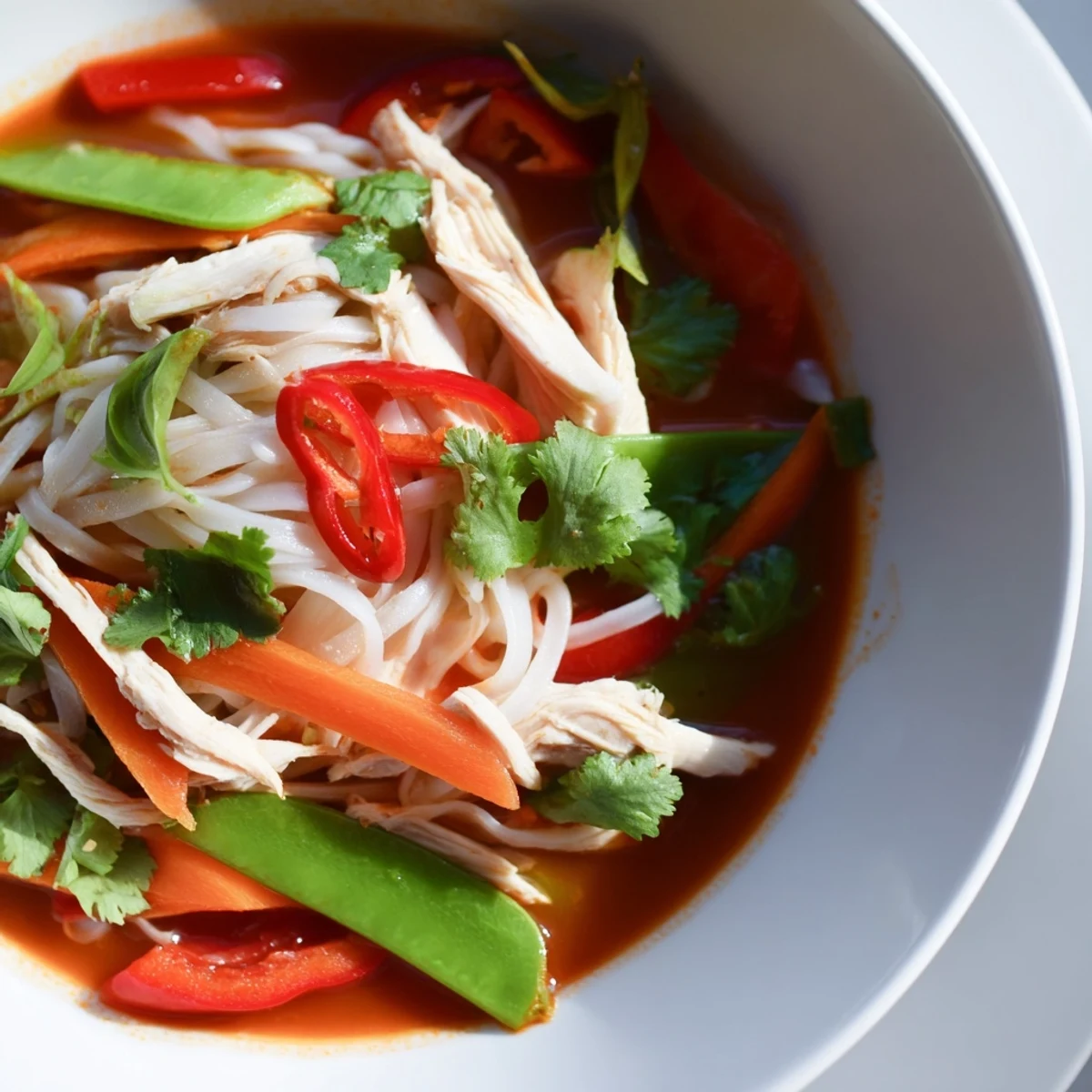
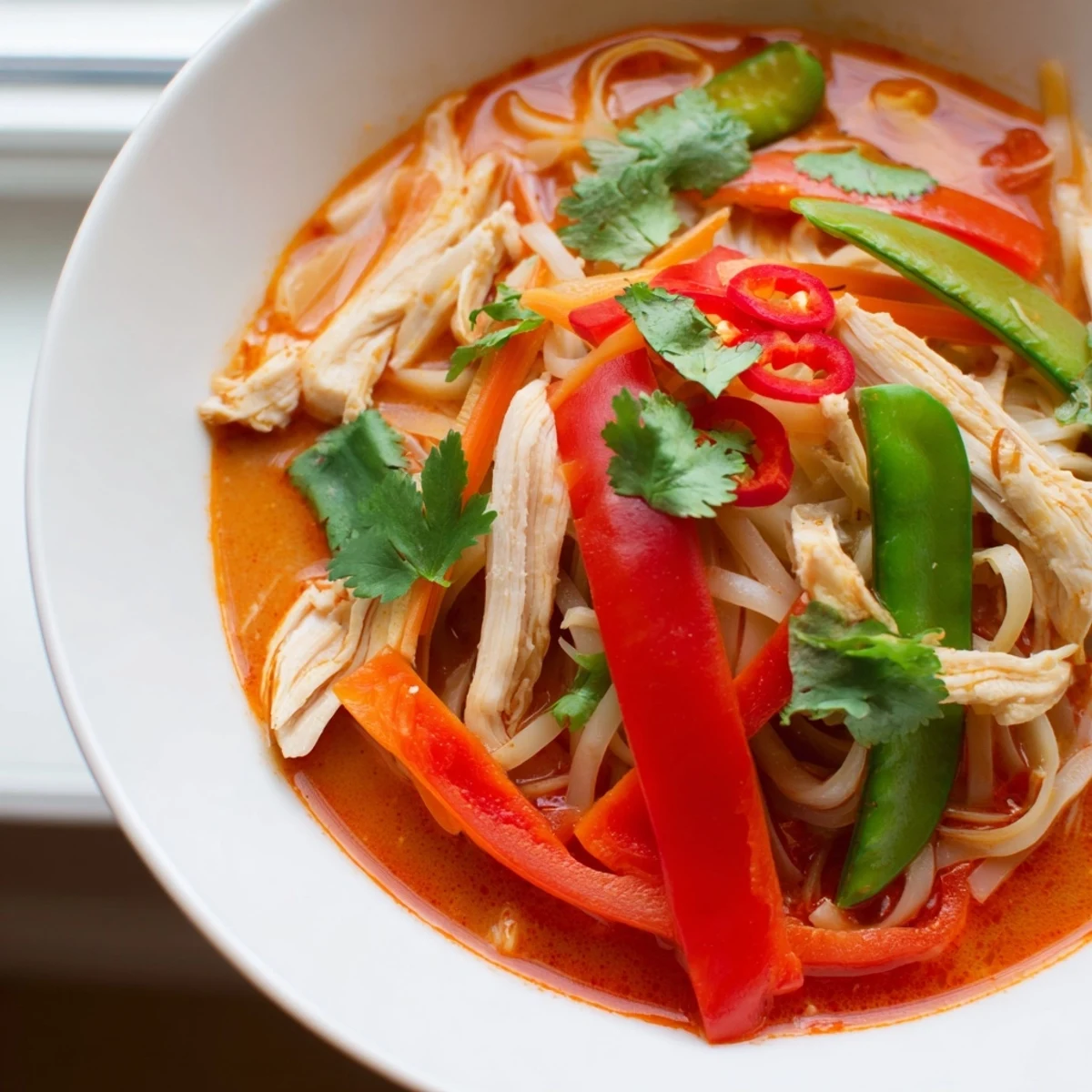
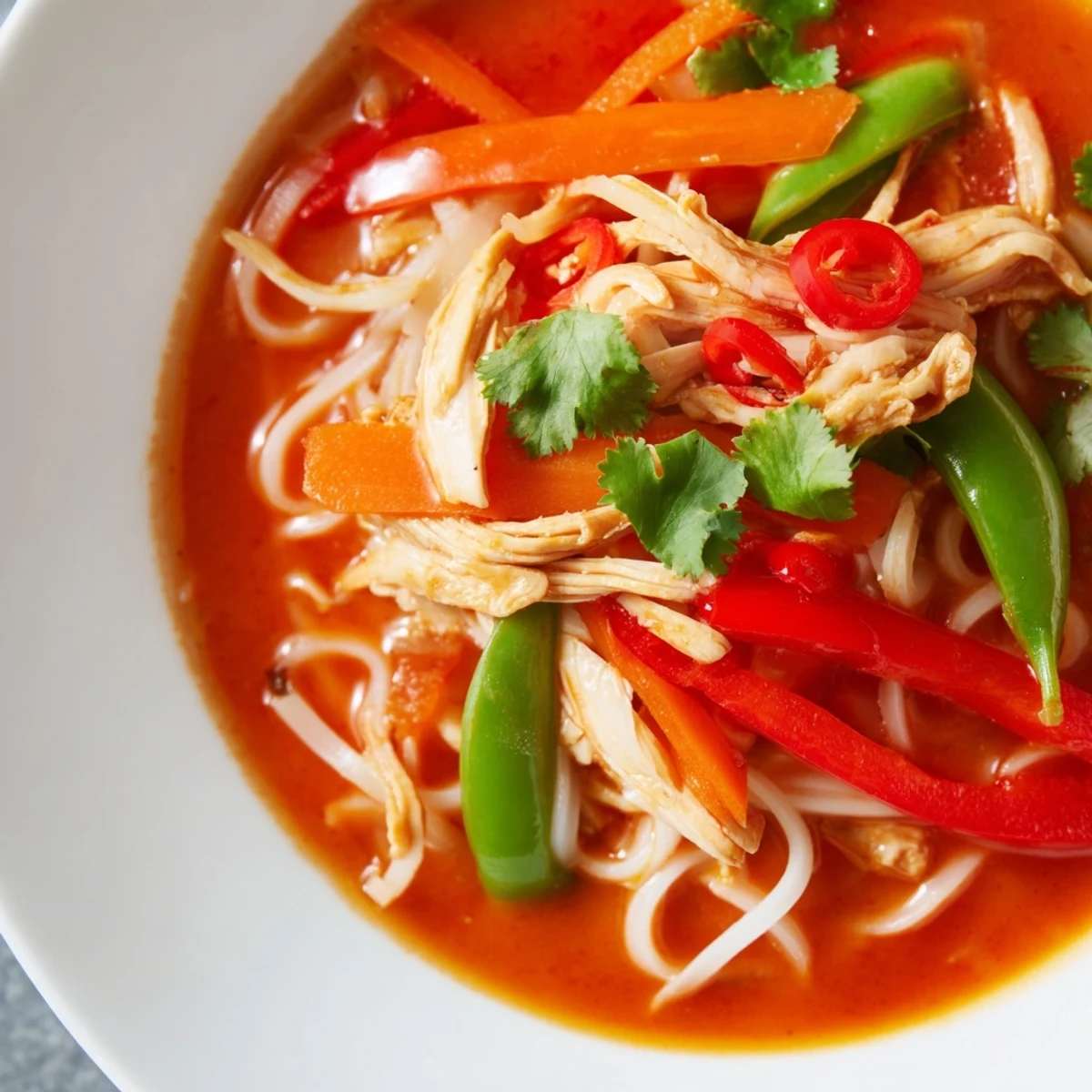
 This vibrant dish combines tender chicken slices with soaked rice noodles and crisp vegetables in a creamy Thai red curry broth. Aromatics like garlic, ginger, and red curry paste are sautéed to build depth, then simmered with coconut milk and chicken stock for a rich, spicy flavor. Fresh herbs and lime juice brighten the bowl, offering a comforting yet bold meal ready in 45 minutes. Customize spice levels or swap chicken for tofu with vegetable stock for variety.
There's a particular Thursday evening that comes to mind—I'd just gotten home from a long day, rain drumming against the windows, and all I wanted was something warm that didn't require complicated thinking. I opened the fridge, saw I had chicken and that jar of Thai red curry paste I'd been saving, and suddenly the kitchen filled with the kind of aroma that makes you stop and just breathe it in. That night, this soup was born, and it's been my go-to ever since whenever I need comfort with a little edge to it.
I made this for my neighbor last winter when she was recovering from the flu, and watching her face light up as she tasted that first spoonful—the warmth, the brightness from the lime—reminded me that food really does heal. She asked for the recipe immediately, and now she texts me photos of her versions. That's when I knew I'd stumbled onto something special.
Ingredients
- Chicken breast or thighs (400g): Thighs stay more forgiving if you're not watching the clock, but breasts work beautifully if you slice them thin and don't overcook.
- Dried rice noodles (200g, medium-width): These soften perfectly in the broth without falling apart, and they soak up all that curry goodness like they were made for it.
- Red bell pepper: The sweetness plays against the spice in a way that makes you want another spoonful immediately.
- Carrot, julienned: Cut them thin so they stay tender and add subtle sweetness to balance the heat.
- Sugar snap peas (100g): These add a little snap and freshness that keeps the soup from feeling heavy.
- Onion (1 small): Slice it thin so it melts into the broth and doesn't dominate.
- Thai red curry paste (2 tablespoons): This is your flavor anchor—don't skimp, but taste as you go since brands vary wildly in heat.
- Garlic and ginger: Fresh and minced—these two wake up the curry paste and make your whole kitchen smell like a good restaurant.
- Coconut milk (400ml): Full fat is non-negotiable; it's what makes this soup actually creamy and luxurious.
- Chicken stock (750ml): Good quality matters here since it's the backbone of the broth.
- Fish sauce, soy sauce, brown sugar, lime: These are the seasoning adjustments that transform it from good to unforgettable—the lime especially brightens everything at the end.
- Fresh cilantro and Thai basil: Never skip the garnish; it's not fancy, it's necessary.
Instructions
- Soak your noodles first:
- Pour hot water over the rice noodles and let them sit according to the package directions until they're just tender—they'll finish cooking in the broth, so don't overdo it here.
- Build your aromatics:
- Heat a little oil in a large pot over medium heat and sauté the onion, garlic, and ginger for a few minutes until the smell makes you lean over the pot and smile. You're waking up the ingredients, not browning them.
- Wake up the curry paste:
- Stir the curry paste into those aromatics and let it sit for about a minute, letting the heat release all its fragrance and depth. This step is small but it makes a real difference in the final flavor.
- Cook the chicken gently:
- Add the sliced chicken and let it cook just until the edges start turning opaque, about 2 to 3 minutes. You're not trying to cook it through yet; that happens in the broth.
- Build the broth:
- Pour in the coconut milk and chicken stock, stirring everything together so the curry paste dissolves into the liquid. This is where it starts tasting like actual soup.
- Season and simmer:
- Add the fish sauce, soy sauce, and brown sugar, then bring it to a gentle boil before lowering the heat. Let it simmer quietly for about 10 minutes so the flavors meld and the chicken finishes cooking through.
- Add the vegetables:
- Slip in the bell pepper, carrot, and sugar snap peas and give them 5 minutes in the simmering broth until they're tender but still a little bright. You want them cooked but not sad.
- Bring it all together:
- Add those drained noodles and let them warm through for a couple of minutes in the soup, absorbing all that flavor.
- Finish with brightness:
- Remove from heat and squeeze in the lime juice—this is what makes your taste buds wake up and take notice.
- Serve and garnish:
- Ladle into bowls and scatter cilantro, Thai basil, maybe a few slices of fresh red chili, and a lime wedge on top. The fresh herbs are not decoration; they're essential.
 Save to Pinterest
 One quiet Sunday, my partner and I made this together without a recipe—just instinct and tasting as we went. There was something meditative about it, the two of us working side by side, and when we sat down to eat, the conversation just flowed like we'd turned on a warmth we didn't know we needed. That's when I realized this soup is about more than flavors; it's about creating a moment.
The Power of Fresh Herbs
I've learned the hard way that basil, cilantro, and a fresh lime wedge aren't optional add-ons—they're where most of the brightness lives. Without them, you have a perfectly fine soup. With them, you have something that feels alive. It's the difference between a meal and an experience, and it takes maybe two extra minutes.
Adjusting Heat to Your Preference
Curry paste brands vary wildly, and what's mild to one person is fire to another. I've started adding my paste a tablespoon at a time, tasting between additions, which feels a little fussy but saves the soup from becoming inedible. If you go too far, a splash more coconut milk mellows things out, or a pinch of brown sugar helps balance the heat. The goal is spice that excites, not spice that punishes.
Variations and Flexibility
This soup is forgiving enough that you can swap in whatever vegetables you have—mushrooms add earthiness, bok choy brings a slight bitterness that's pleasant, baby corn adds a fun texture. For a vegetarian version, I swap the chicken for extra-firm tofu and use vegetable stock instead of chicken, which honestly tastes just as good. The framework is flexible; it's the curry paste and coconut milk that give it its soul.
- Mushrooms, baby corn, or bok choy all work beautifully if that's what's in your crisper drawer.
- Tofu soaks up the broth flavor beautifully and gives a completely different but equally satisfying version.
- Leftover roasted vegetables won't hurt here, though fresh is always more vibrant.
 Save to Pinterest
 This soup has become my answer to almost everything—a long day, a friend who needs feeding, an ordinary Tuesday that could use something extraordinary. It reminds me that the best cooking doesn't require fancy technique or impossible ingredients, just a little care and the willingness to taste as you go.
Recipe FAQs
- → How do I prepare the rice noodles for this dish?
-
Soak rice noodles in hot water until tender but still firm, then drain and set aside before adding to the broth.
- → Can I substitute chicken with a vegetarian protein?
-
Yes, tofu works well as a substitute. Use vegetable stock and skip fish sauce or use a vegetarian alternative to maintain flavor balance.
- → What spices contribute to the dish’s heat and aroma?
-
Thai red curry paste provides the spicy, aromatic base, complemented by garlic, ginger, and optional red chili slices for extra heat.
- → How can I adjust the spice level to my preference?
-
Modify the amount of red curry paste or omit the chili slices to reduce heat, or add more paste for increased spiciness.
- → What fresh herbs are recommended for garnish?
-
Cilantro and Thai basil leaves add a fresh, herbal contrast that enhances the rich, spicy flavors in the dish.