
 Save to Pinterest
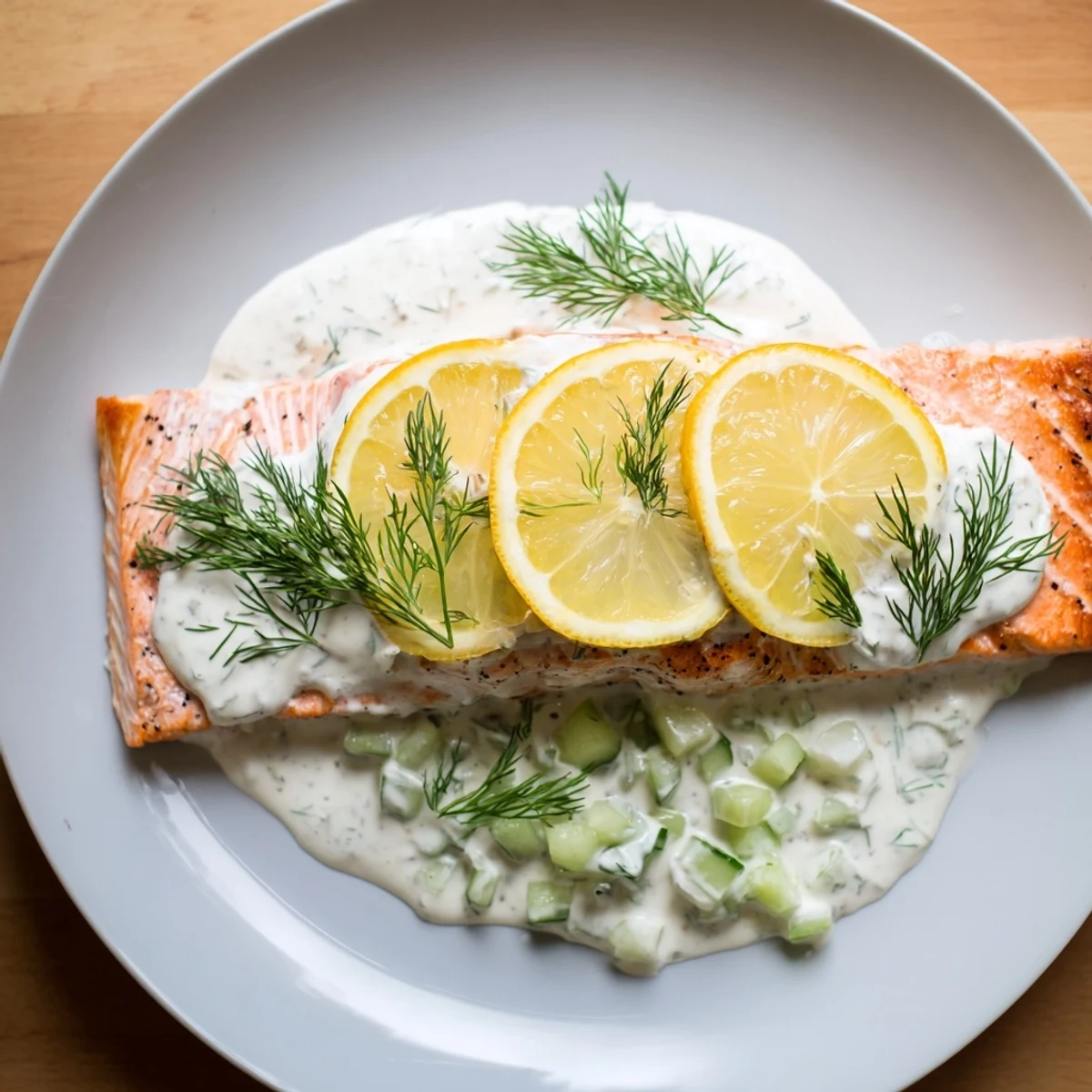
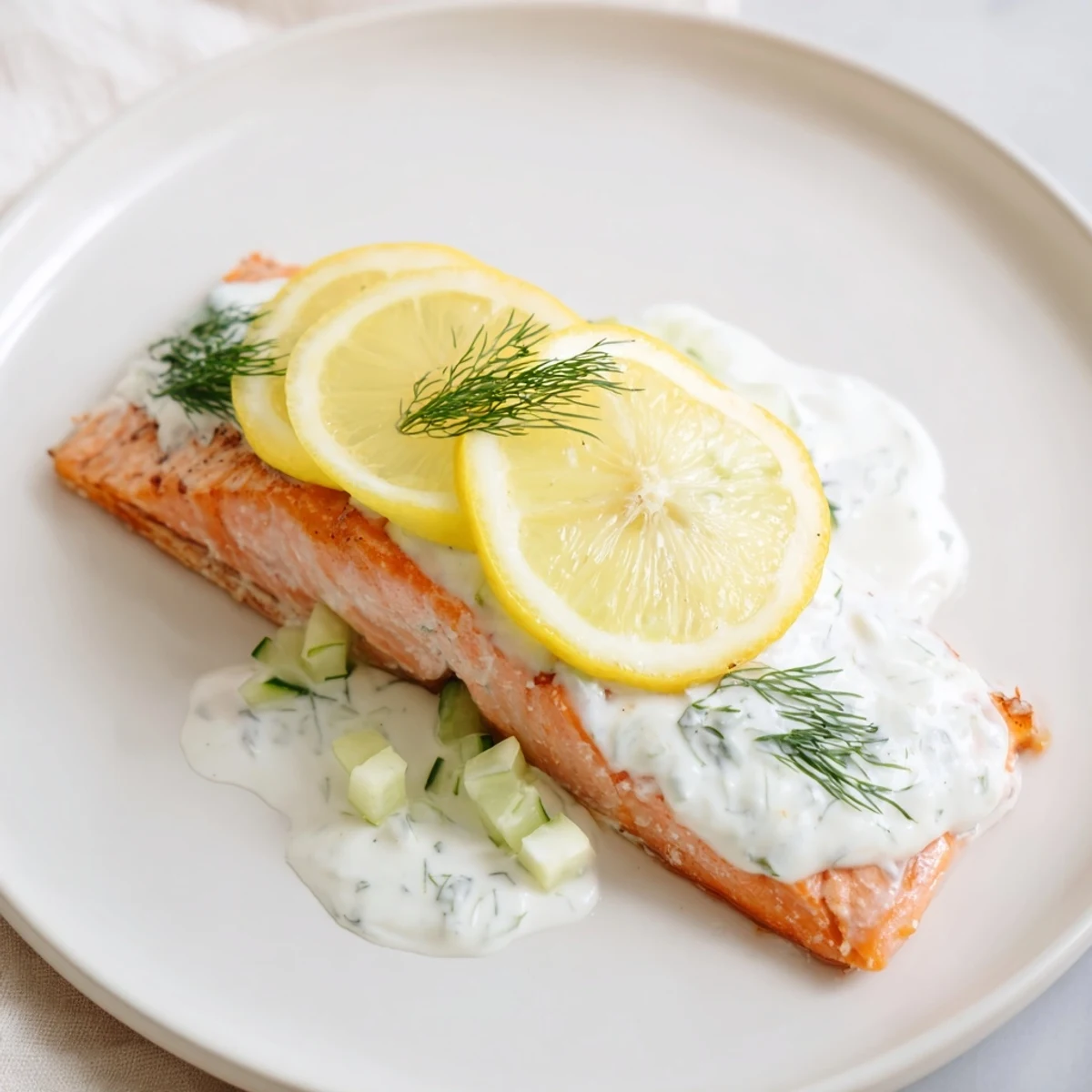
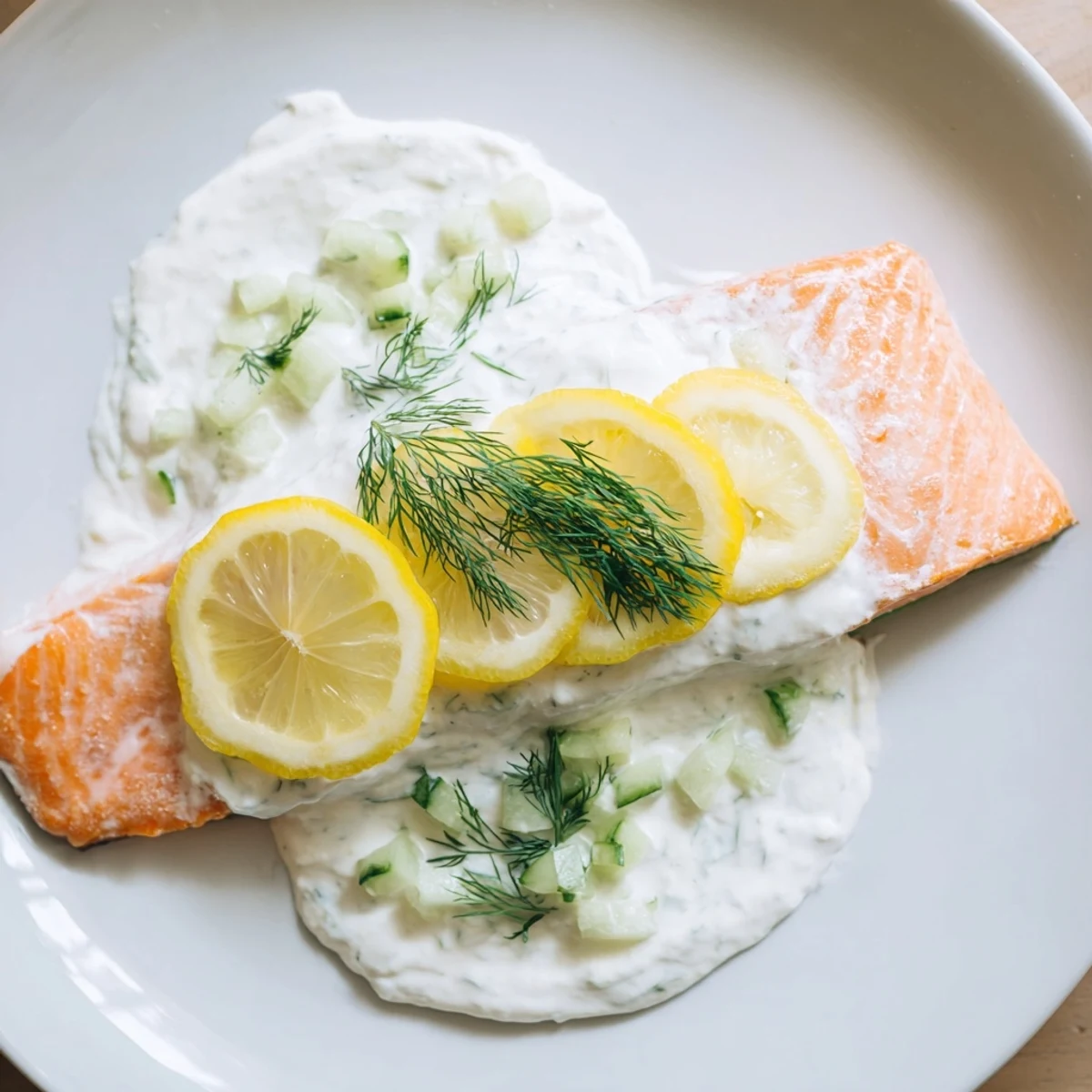
 This dish features tender salmon fillets baked to perfection with olive oil, lemon, salt, and pepper. Complementing the salmon is a refreshing cucumber yogurt sauce infused with fresh dill, lemon juice, and garlic, adding brightness and creaminess. The fish is lightly seasoned and baked until flaky, creating a healthy and elegant option suitable for a pescatarian and gluten-free diet. Optional garnishes like dill sprigs and lemon wedges enhance the flavors and presentation, making it an ideal main course for a light and satisfying meal.
I discovered this salmon while cooking for someone who'd just moved to the neighborhood—they mentioned loving fish but being tired of the same old preparations. I wanted something that felt special without being fussy, and the combination of warm, flaky salmon with cool, herby yogurt just clicked. That first evening, watching them close their eyes after that first bite, I knew I'd stumbled onto something worth making again.
There was an afternoon when my sister came over stressed about a dinner party, and I threw this together while she sat at the counter with a cup of tea. By the time her guests arrived, the salmon was golden and resting, the sauce was chilling, and she looked genuinely proud of herself for the meal. Sometimes the best recipes are the ones that make you look effortless.
Ingredients
- Salmon fillets (4, about 150 g each): Skin-on keeps things moist and crispy, but skinless works too if that's what you prefer—just watch it doesn't dry out in the oven.
- Olive oil (2 tbsp): This is your insurance against dry fish; don't skimp on this step.
- Lemon (1, thinly sliced): The slices go right on top and perfume the fish as it bakes, then become a edible garnish.
- Sea salt and freshly ground black pepper: Quality matters here since there's not much competing with the salmon's delicate flavor.
- Greek yogurt (1 cup, 240 g): Full-fat is creamier and more forgiving, but low-fat works if that's your thing.
- Cucumber (½ cup, 70 g, finely diced): Seed it first so the sauce doesn't get watery—I learned that the hard way.
- Fresh dill (2 tbsp, finely chopped): This is where the magic lives; don't use dried dill if you can help it.
- Lemon juice (1 tbsp): Fresh squeezed brightens everything and keeps the sauce from tasting flat.
- Garlic (1 small clove, minced): One clove is enough; garlic can bully this sauce if you're not careful.
Instructions
- Heat your oven and prepare:
- Preheat to 200°C (400°F) and line a baking sheet with parchment paper. This temperature is hot enough to cook the salmon through without making the edges tough.
- Season and arrange the salmon:
- Place fillets skin-side down, brush generously with olive oil, and season with salt and pepper. Layer the lemon slices on top of each fillet—they'll caramelize slightly and flavor the fish as it cooks.
- Bake until just opaque:
- Slide into the oven for 15–20 minutes; you're looking for the center to turn opaque and the flesh to flake easily when tested with a fork. Don't overbake or it gets dry and sad.
- Make the sauce while the salmon cooks:
- Combine Greek yogurt, diced cucumber, dill, lemon juice, garlic, salt, and pepper in a bowl. Mix gently until everything is incorporated, then refrigerate until you need it.
- Plate and finish:
- Remove salmon from the oven and let it rest for a moment. Spoon the cold sauce over the warm fish or serve it on the side, then add fresh dill sprigs and lemon wedges if you're feeling fancy.
 Save to Pinterest
 I made this for my mom once when she was going through a phase of eating lighter, and she asked for the recipe before she finished her plate. That's when I knew it wasn't just good food—it was the kind of dish that makes people feel cared for without being obvious about it.
Why This Recipe Works
The beauty of baked salmon is that there's almost no way to mess it up if you're paying attention. The parchment paper means the fish steams gently in its own moisture while the oil keeps everything tender. The lemon slices aren't just flavor—they're protection, creating a barrier that seasons the fish from above and keeps the top from drying out.
About That Sauce
The cucumber yogurt sauce is what transforms this from a simple baked fish into something that feels intentional. It's cooling and creamy, which is exactly what warm salmon needs. The dill is the backbone here; it echoes the lemon and reminds you that good food is often just about letting ingredients talk to each other instead of fighting for attention.
Serving and Pairing Ideas
Serve this with whatever feels right for the moment. Roasted potatoes give you substance, a crisp green salad keeps things light, or just some good bread to mop up extra sauce. The beauty is that this dish doesn't demand anything specific from its sides—it's happy to be the main event.
- A glass of crisp white wine makes everything taste better, but that's just me being obvious.
- Leftovers are actually good cold the next day, which hardly ever happens with fish.
- If you have extra sauce, it's also delicious on roasted vegetables or grilled chicken.
 Save to Pinterest
 This is the kind of recipe that quietly earns a permanent spot in your rotation. It's elegant enough for guests but simple enough for a regular Tuesday, and it always makes you feel like you know what you're doing in the kitchen.
Recipe FAQs
- → How do I know when the salmon is perfectly baked?
-
The salmon is done when it flakes easily with a fork and appears opaque in the center.
- → Can I prepare the cucumber yogurt sauce ahead of time?
-
Yes, you can mix the sauce in advance and refrigerate it until ready to serve to enhance the flavors.
- → Is it necessary to keep the skin on the salmon fillets?
-
Skin-on fillets help retain moisture during baking, but you can remove the skin if preferred.
- → What can I serve alongside this salmon dish?
-
Roasted potatoes or a crisp green salad pair wonderfully with the baked salmon and yogurt sauce.
- → Can I substitute Greek yogurt for a dairy-free option?
-
Yes, a dairy-free yogurt can be used to make the sauce lactose-free without sacrificing creaminess.